VR Powerwall Solutions for Industry, Education and Research
Immersive Visualization with VR Powerwalls
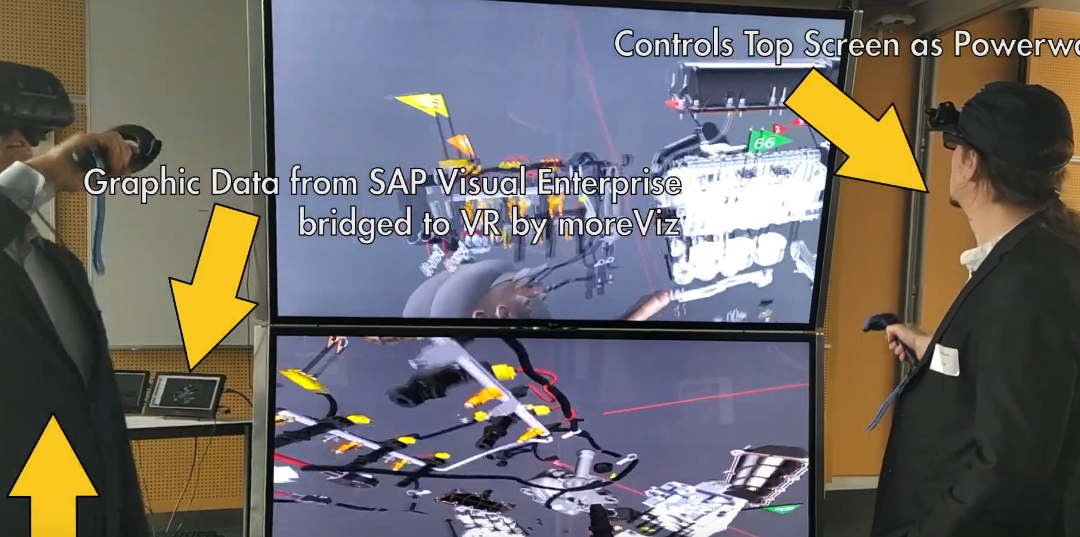
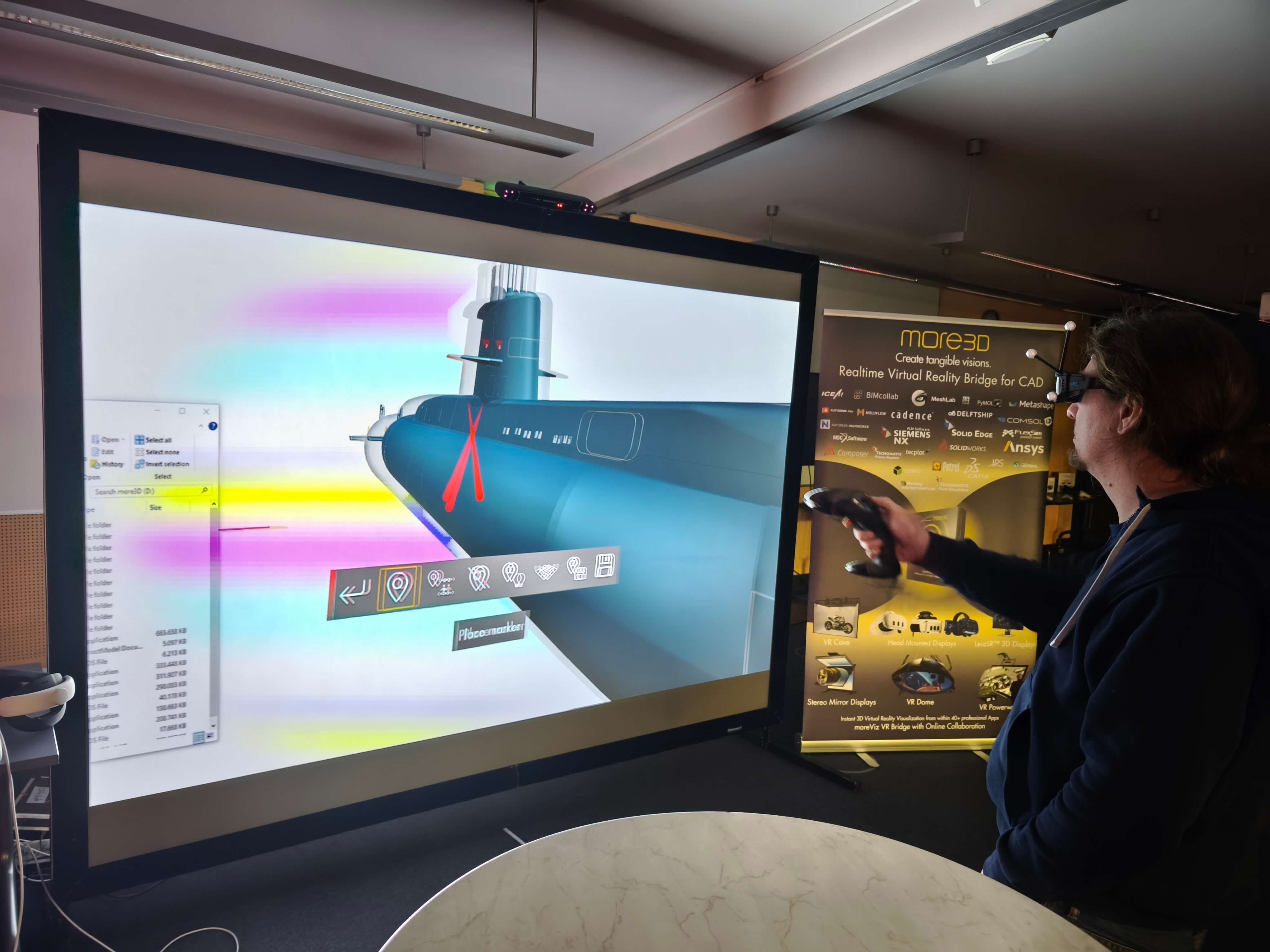
✔ Step into your designs, layouts, and simulations at true scale
✔ Review complex 3D data together without headset isolation
✔ Connect supported existing applications directly with moreViz
Benefits of 3D & VR Visualization
Why choose a VR Powerwall?
Multi-User Interaction
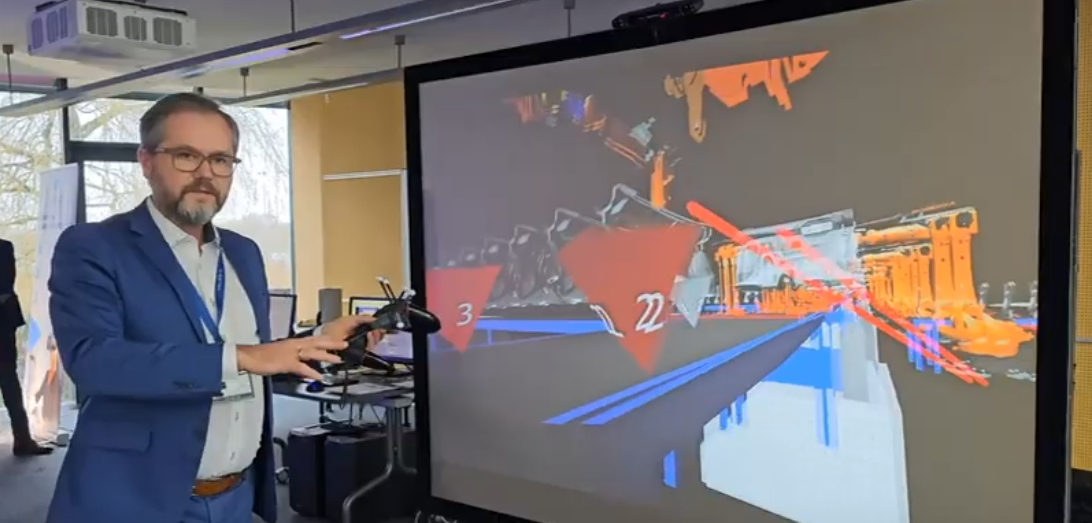
Interact using tracked laser pointers, controllers, or gestures for dynamic team engagement.
Natural Collaboration
No headsets needed; just natural eye contact, pointing, and real-time discussion across teams.
Quick Setup & Integration
Quick to deploy and seamlessly integrated into your existing workflow with minimal disruption.
Comfort & Accessibility
Enjoy immersive experiences without motion sickness, perfect for extended sessions.
High-Fidelity, True Scale
View designs at life-size with crisp, accurate stereoscopic depth for decision-making.
Seamless Remote Acces
Easily extend sessions to remote users via HMDs, enabling real-time, global teamwork.
One VR Powerwall Is Not Like Another
Choose the Right VR Powerwall Format
Classic Powerwall
Curved Screen
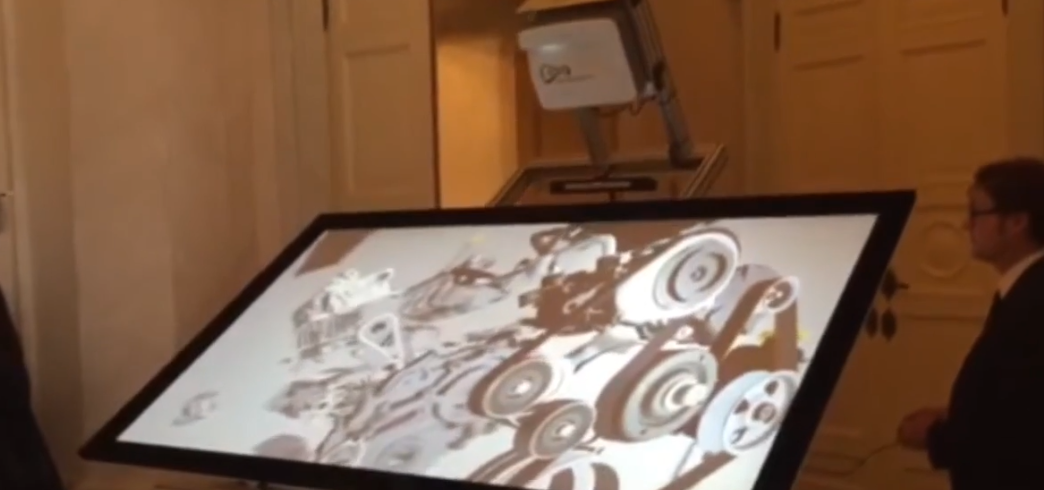
Angled Screen
Different Technologies for Immersive Stereoscopic VR
LED Wall vs. Projector Powerwall
| LED Wall | Projector Powerwall | |
|---|---|---|
|
Brightness
|
Very HighWorks great in ambient light | LowerBest in controlled lighting |
|
Image Quality
|
High ContrastDeep blacks, vibrant colors | Very GoodSmooth image, no visible pixels |
|
Space
|
Slim DesignMinimal depth required | More Space NeededProjector distance required |
|
3D / VR
|
PossibleCheck 3D and refresh rate | Proven & EstablishedIdeal for VR and stereo workflows |
|
Initial Cost
|
$1,500 / m² | $600 / m² |
|
Maintenance
|
LowModular repair, minimal calibration | RegularCalibration, filters |
|
Lifespan
|
50,000 – 100,000+ HoursLong lifetime | 20,000 – 30,000 Hours*Laser light source |
*Typical value. Depends on model and usage.
moreViz in Action with Powerwalls
See Powerwall Demo Videos
Practical Use Cases of VR Powerwalls
Effective Use of VR Powerwalls
Collaborative Design Reviews
Review CAD models at true scale and identify issues before prototyping.
Stakeholder Presentations
Explain complex designs clearly to teams, customers, and decision makers.
Sales & Trade Fairs
Present products, variants, and concepts impressively before they are physically built.
Research Visualization
Explore together complex simulations, datasets, and spatial structures in immersive 3D.
Training & Education
Create realistic learning environments without expensive machines or safety hazards.
Factory Planning
Walk through layouts, and improve workflows before implementation.
Powerwall optimised for Multi-User VR
Advanced Multi-User VR Visualization
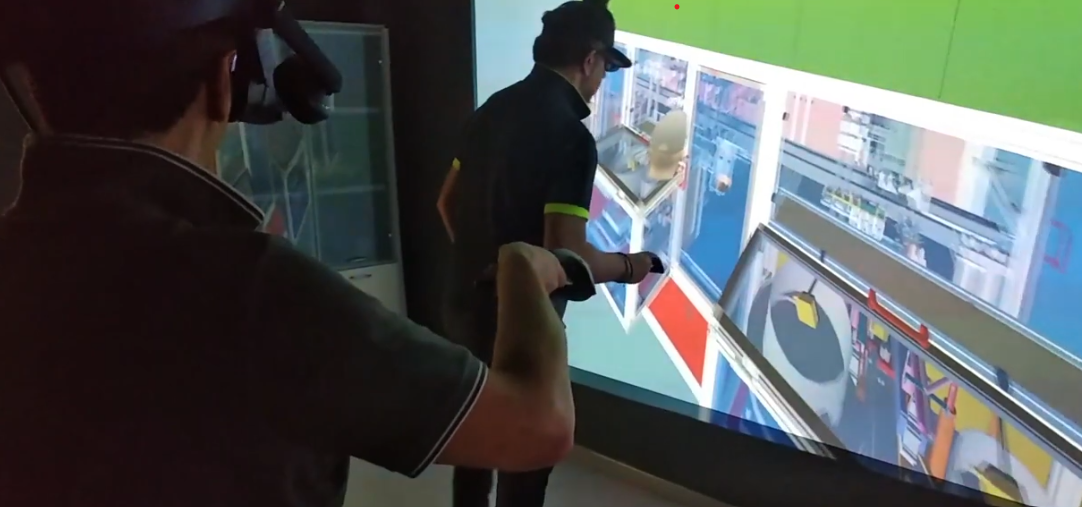
With our partner xCAVE we combine the advantages of a large stereoscopic display with individual user perspectives. Several users can view the same 3D scene from their own tracked position. This allows several people to explore the same 3D scene together while maintaining natural communication in the room.
VR Powerwall
Frequently asked Questions
What does a typical VR Powerwall setup look like?
A typical Powerwall installation consists of:
- a high-resolution display surface (rear-projection screen or tiled panels)
- one or more stereo-capable projectors or 3D LED panels
- motion tracking systems (e.g. recommended Advanced Realtime Tracking GmbH & Co. KG and OptiTrack)
- active stereo glasses
- one GPU per display client (recommended)
- Software: moreViz for direct integration with CAD and simulation tools
What configurations are possible?
Curved Screens – Wrap visuals around the user to enhance immersion.
Angled Screens – Ideal for production floors: see distant views and close details simultaneously.
Stacked Projectors – Combine multiple projectors to scale resolution and size as needed.
Hybrid Screen Layouts – Mix horizontal and vertical edges to match your physical space and workflow.
How does a Powerwall compare to a CAVE or HMD?
Compared to HMDs:
No headsets required → More comfortable for long sessions
Shared view → Better team communication and natural interaction
Easier onboarding → No device pairing or individual calibration
No motion sickness → Stable reference frame reduces discomfort
Compared to CAVEs:
Simpler installation → Requires less space and infrastructure
More budget-friendly → Especially in single-wall setups
Ideal for front-facing teamwork → Great for presentations and focused group sessions
Less spatial immersion → CAVEs offer wider field-of-view but with more setup complexity
How much does a VR Powerwall cost?
The cost of a Powerwall depends on screen size, resolution, projection technology, and tracking system.
A compact single-projector setup can start around €30,000, while high-end, multi-projector or tiled display systems with tracking may range from €80,000 to over €200,000.
more3D offers flexible configurations and can help plan a solution that fits your budget and space.
Are there flexible or movable Powerwall systems?
Yes. Powerwalls can be designed as mobile or modular units, ideal for multi-use spaces, trade shows, or on-site demos.
Using lightweight rear-projection screens, foldable frames, and compact projectors, more3D can deliver portable Powerwall setups that are quick to assemble, disassemble, and transport – without compromising on visual quality or interactivity.
Let us know your mobility needs, and we’ll help configure the right solution.
Practical VR insights
Stay up to date with more3D
Get useful insights for VR projects, new moreViz features and real-world case studies. No hype. Just practical information for planning and using VR effectively.
How the VR Visualization Works
From CAD to VR in Minutes
Bringing your designs into virtual reality has never been easier. With moreViz, you can view and interact with your existing 3D models – without modifying your source code or exporting files. Just 3 simple steps.
Step 1 - Install moreViz Software
Install moreViz, connect your VR hardware, and follow our step-by-step guide - or let us support you directly.
Step 2 - Launch Your Application
Start your OpenGL software - like Siemens NX or PTC Creo - and see your 3D model in full-scale VR, instantly.
Step 3 - Explore, Present, Decide
Walk through your design and run virtual reviews. We’re happy to help with setup and maintenance.